Alexei Pozdnoukhov

Photograph of Alexei Pozdnoukhov

Position: SFI Stokes Lecturer

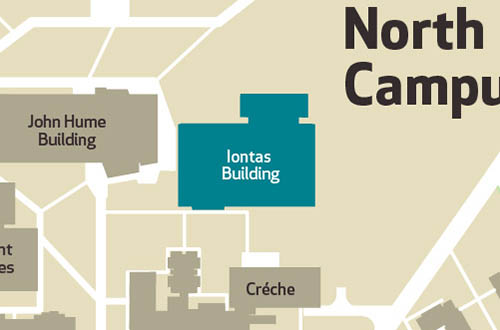
Office: Office 2.02
2nd Floor
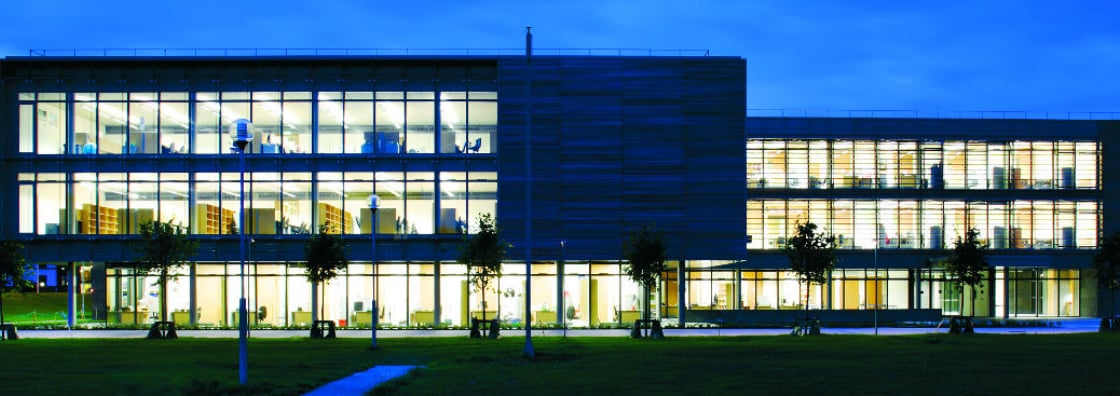
Iontas Building
NUI Maynooth

Telephone: +353 (0) 1 708 6146

Fax: +353 (0) 1 708 6456

Email: Alexei.Pozdnoukhov@nuim.ie


Research areas:

machine learning, spatial data mining, computational social science


Software:

With Fergal Walsh, Christian Kaiser and Cathal Coffey we are developing i2maps: a modular software framework to automate collection, analysis and visualization of spatio-temporal data streams. i2maps


Recent papers:

Tuia D., Joost S., Pozdnoukhov A. Active multiple kernel learning of wind power resources, Machine Learning for Sustainability workshop at NIPS'11, 2011. PDF Icon.

Pozdnoukhov A., Kaiser C. Scalable Local Regression for Spatial Analytics, Proc. Of the 19th ACM SIGSPATIAL GIS'2011, 2011 PDF Icon (full version).

Pozdnoukhov A., Kaiser C. Space-Time Dynamics of Topics in Streaming Text, Location Based Social Networks workshop at 19th ACM SIGSPATIAL GIS'2011, 2011 PDF Icon (Best Paper Award).

Pozdnoukhov A., Kaiser C. Area-to-point Kernel Regression on Streaming Data, Geostreaming workshop at 19th ACM SIGSPATIAL GIS'2011, 2011 PDF Icon.

Coffey C., Pozdnoukhov A., Calabrese F. Time of Arrival Predictability Horizons for Public Bus Routes, Computational Transportation Science workshop at 19th ACM SIGSPATIAL GIS'2011, 2011.

Walsh F., Pozdnoukhov A., Spatial structure and dynamics of urban communities, Pervasive Urban Applications workshop at PERVASIVE'2011, 2011 PDF Icon.

Kaiser C., Pozdnoukhov A., Enabling Real-time City Sensing with Kernel Stream Oracles and MapReduce, Pervasive Urban Applications workshop at PERVASIVE'2011, 2011.

Pozdnoukhov A., Spatial extensions to kernel methods, Proc. Of the 18th ACM SIGSPATIAL GIS (short paper), 2010 PDF Icon.

Pozdnoukhov A., Walsh F., Exploratory Novelty Identification in Human Activity Data Streams, ACM SIGSPATIAL International Workshop on GeoStreaming at 18th ACM SIGSPATIAL GIS, 2010 PDF Icon

Pozdnoukhov A., Walsh F., Kaiser F., Statistical Machine Learning from VGI, Position paper at Role of Volunteered Geographic Information in Advancing Science Workshop at GIScience'10, 2010.

Kaiser C., Walsh F., Farmer C. and Pozdnoukhov A., User-centric time-distance representation of road networks. In Springer LNCS proc. of the GIScience'10 (full paper). 2010. PDF Icon

Pozdnoukhov A., Dynamic network data exploration through semi-supervised functional embedding. Proc. Of the 17th ACM SIGSPATIAL GIS ISBN:978-1-60558-649-6 2009. PDF Icon

Foresti L., Tuia D., Kanevski M. and Pozdnoukhov A. Learning wind fields with multiple kernels. Stochastic Environmental Research and Risk Assessment, In press, 2010. PDF Icon

Tuia D., Ratle F., Pozdnoukhov A., Camps-Valls G. Multisource Composite Kernels for Urban-Image Classification. IEEE Geoscience and Remote Sensing Letters, In press, 2010. PDF Icon


Current projects:

RFP SFI Research Frontiers Programme: Learning Human Spatial Dynamics. Principle Investigator, (2011-2015).
Stokes and StratAG SRC SFI StratAG: Strategic Research Cluster in Advanced Geotechnologies. Co-PI, Scalable Statistical Learning project lead, Coordinator of the City-Scale Demonstrator (2011-2013).
GMorphs GMorphs: Contextual morphing of GMaps (Google Research Award 2010). Principle Investigator.
IBM Supervisor, an IBM PhD Fellowship Award to Cathal Coffey.
Data Analytics for Smarter Driving (Scalable Data Analytics Award 2010). Co-PI with PI Tim McCarthy.
COSMIC COSMIC: Complexity in Spatial Dynamics (ERA-NET on Complexity). Co-investigator with CASA-UCL (M. Batty), VU Amsterdam (P. Nijkamp), and University of St.Andrews (S. Fotheringham) (2010-2012).
Geocrowd Marie-Curie ITN Geocrowd: Creating Geospatial Knowledge World. Scientist in charge at NUIM (2011-2014).


Media:

Dynamic mapping of GSM and 3G mobile phones usage reveal interesting patterns of user's activity. This heatmap is computed with a geographically weighted kernel density estimate with a temporal resolution of 15 minutes. So enjoy one week of Irish life as seen by a mobile phone network!

There are also methods both in spatial statistics and machine learning to downscale population densities to the street level from areal support data which is common to non-pervasive sensing infrastructures PDF Icon.

We use i2maps for a variety of geospatial data analysis studies, including statistical weather now-casting, dynamic mapping of GSM and 3G mobile phones usage, multi-agent simulations of pedestrians and traffic, visualisations of congestion impact on the transportation systems, world-wide instant messaging activity (demo on the left), etc.


Environmental data mining

With Loris Foresti we work on pattern recognition methods in meteorological applications. Using data streams from weather sensor networks we detect, try to explain and predict such specific events as temperature inversion, topography influence on mountain winds, and orographic enhancement of precipitation cells detected from rain radar imagery. More.

Foresti L., Pozdnoukhov A. Exploration of alpine orographic precipitation patterns with radar image processing and clustering techniques. Meteorological Applications, John Wiley & Sons, DOI 10.1002/met.272 (in press), 2011. PDF Icon

Foresti L., Kanevski M., Pozdnoukhov A. Kernel-based Mapping of Orographic Rainfall Enhancement in the Swiss Alps as Detected by Weather Radar. IEEE Transactions on Geoscience and Remote Sensing (in press), 2011.


My other interest is predictability of snow avalanches. Using weather and avalacnhe observations from the past 15 years (SAIS) we explore if Support Vector Machine classifier can be useful for the task.

Pozdnoukhov, A., Matasci, G., Kanevski, M., and Purves, R.S. Spatio-temporal avalanche forecasting with Support Vector Machines. Nat. Hazards Earth Syst. Sci., 11, 367-382, 2011. PDF Icon

Sample avalanche danger model


Book:

Machine Learning for Spatial Environmental Data Kanevski M., Pozdnoukhov A., Timonin V. Machine Learning Algorithms for Geospatial Data. Theory, Applications and Software. 377pp. EPFL press, 2009. Link

Other publications:

Demyanov V., Pozdnoukhov A., Christie M., Kanevski M., Detection of Optimal Models in High Dimensional Parameter Space with Support Vector Machines. Springer Series: Quantitative Geology and Geostatistics; ISBN: 978-90-481-2321-6 2010. Link

Pozdnoukhov A., Foresti L. and Kanevski M., Data-driven topo-climatic mapping with machine learning algorithms. Natural Hazards Journal, Volume 50, Issue 3, pp. 497-518. 2009. Link; PDF

Pozdnoukhov A., Purves R.S., Kanevski M. Applying Machine Learning Methods to Avalanche Forecasting. Annals of Glaciology, vol. 49., pp. 107-113, PDF 2008.

Pozdnoukhov A., Kanevski M. Multi-Scale Support vector Regression for hot spot detection and modeling. In Stochastic Environmental Research and Risk Assessment (SERRA), DOI 10.1007/s00477-007-0162-x, 14 pp., 2007.

Pozdnoukhov A., Bengio S. From Samples to Objects: Invariances in Kernel Methods. Pattern Recognition Letters Journal, Volume 27, Issue 10, pp. 1087-1097. 2006.

Pozdnoukhov A., Kanevski M. Monitoring Network Optimisation for Spatial Data Classification Using Support Vector Machines. Int. Journal of Environment and Pollution. Vol.28. 20 pp., 2006.


Teaching:

NCG 602 - Methods and techniques of geocomputation: spatial statistics, geostatistics, GWR.
Project example: ArcGIS toolbox with GUI implementing a custom spatial statistics method.
Scripting languages required: Python, R.

NCG 603 - Advanced methods and techniques: GWR, pattern recognition and machine learning, multi-agent systems.
Project example: Object recognition in optical remote sensing imagery.
Scripting languages required: Python, Matlab.

MS Thesis: I'm always open to supervise a strong thesis. Tell me your idea, check this, be ready to learn a lot and to do some scripting - and expect writing a paper on your reseach afterwards!


Background:

Alexei received a Ph.D. in computer science from EPFL, Switzerland, following his research in machine learning methods and computer vision that he carried out at IDIAP Research Institute in Martigny, Switzerland. He then worked at the Institute of Geomatics and Analysis of Risk (IGAR), University of Lausanne.